A job interview is your opportunity to make a strong first impression, and knowing how to dress for job interviews can help you appear confident, professional, and prepared. While your skills and experience matter most, your outfit plays an important role in how employers perceive you during those first few moments.
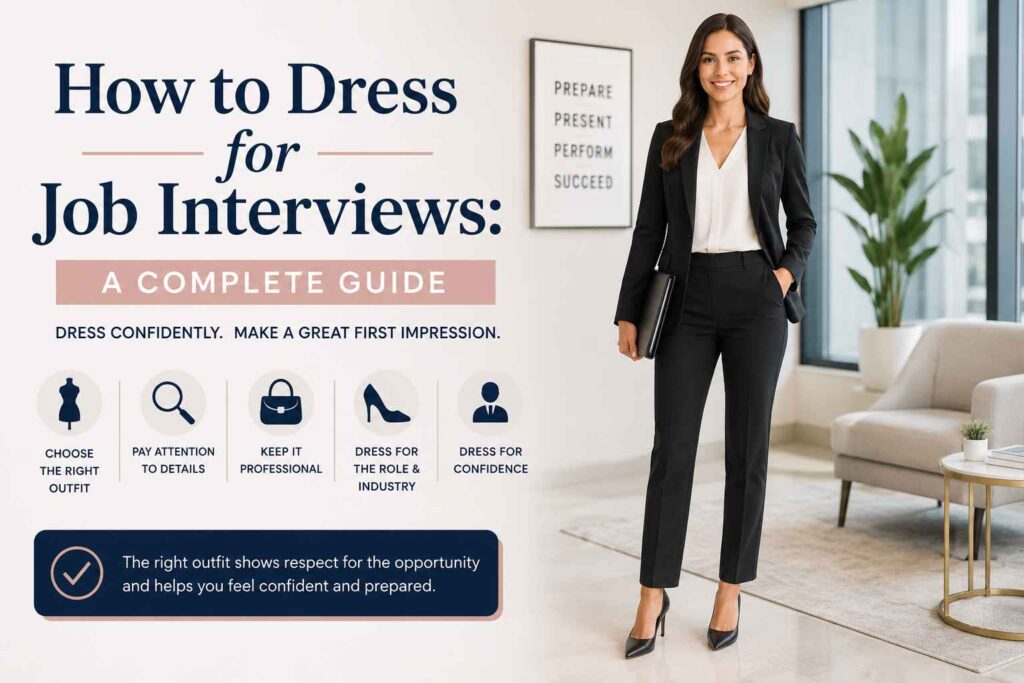
The best interview outfit balances professionalism, comfort, and appropriateness for the company culture. This guide covers what to wear, what to avoid, and how women can dress confidently for job interviews across different industries.
Essential Items to Buy for Job Interview Outfits
Building an interview-ready wardrobe doesn’t require dozens of pieces. Start with these versatile essentials:
- Tailored blazer
- White button-down shirt
- Silk or satin blouse
- Tailored trousers
- Pencil skirt
- Midi dress
- Closed-toe pumps
- Ballet flats
- Loafers
- Neutral handbag
- Simple jewelry
- Nude or black tights
- Structured cardigan
- Black belt
- Neutral-colored blazer
Why Interview Attire Matters
Your clothing communicates professionalism before you even introduce yourself. Employers often form initial impressions within seconds, making your appearance an important part of the interview process.
Dressing appropriately shows respect for the opportunity and demonstrates that you understand workplace expectations. A polished outfit can also boost your confidence, helping you focus on answering questions rather than worrying about your appearance.
Understanding Different Workplace Dress Codes
Not every company expects the same level of formality. Researching the organization beforehand can help you choose an outfit that fits its culture.
Corporate and Financial Industries
Banks, law firms, consulting companies, and corporate offices often expect business professional attire. Structured suits, tailored dresses, and classic pumps are typically appropriate choices.
Business Casual Workplaces
Marketing agencies, healthcare offices, and many administrative roles may prefer business casual attire. Tailored trousers, blouses, and loafers often work well.
Creative Industries
Design studios, fashion companies, and startups may allow more flexibility. While professionalism remains important, you can often incorporate more personality into your outfit.
How to Dress for Job Interviews
Choose a Tailored Blazer
A well-fitted blazer instantly creates a professional appearance. Black, navy, gray, and beige are versatile colors that work for most industries.
Blazers can elevate simple outfits and help create a polished silhouette suitable for interviews.
Wear a Professional Blouse
A blouse should be neat, comfortable, and conservative. Solid colors such as white, cream, light blue, and soft pastels are excellent choices.
Avoid overly low necklines, sheer fabrics, or distracting embellishments.
Opt for Tailored Trousers
Tailored trousers are one of the safest and most versatile interview options. They provide comfort while maintaining a professional appearance.
Straight-leg and tapered styles are particularly flattering and appropriate for most workplaces.
Consider a Knee-Length or Midi Dress
A simple, professional dress can be an excellent interview choice. Look for styles with modest necklines and appropriate lengths.
Adding a blazer can make the outfit even more polished and interview-ready.
Choose Appropriate Shoes
Footwear should be clean, comfortable, and professional.
Good options include:
- Closed-toe pumps
- Block heels
- Ballet flats
- Loafers
- Low-heeled ankle boots
Avoid extremely high heels, worn-out shoes, or overly casual footwear.
Keep Accessories Minimal
Simple accessories help maintain a professional appearance.
Consider:
- Stud earrings
- Delicate necklace
- Classic watch
- Structured handbag
Avoid overly large jewelry pieces that may distract from the conversation.
Best Interview Outfits for Different Industries
Corporate Interview Outfit
For highly professional environments, consider:
- Navy blazer
- White button-down shirt
- Tailored trousers
- Closed-toe pumps
- Structured handbag
This combination projects competence and professionalism.
Business Casual Interview Outfit
For less formal workplaces:
- Neutral blouse
- Tailored ankle-length trousers
- Loafers
- Minimal jewelry
This outfit strikes a balance between polished and approachable.
Creative Industry Interview Outfit
Creative workplaces often allow more personal style while maintaining professionalism.
Consider:
- Midi dress
- Structured blazer
- Elegant flats
- Statement watch
Keep the overall look refined rather than trendy.
Colors That Work Best for Interviews
Navy is often associated with professionalism, trust, and confidence. It’s one of the safest interview colors.
Black
Black appears polished and sophisticated, especially when paired with lighter colors.
Gray
Gray creates a professional and balanced appearance suitable for many industries.
Beige and Cream
These neutral shades can make outfits appear polished and approachable.
Soft Pastels
Light blue, blush pink, and soft lavender can add personality while remaining professional.
What to Avoid Wearing to an Interview
Overly Casual Clothing
Avoid:
- Ripped jeans
- Leggings
- Graphic t-shirts
- Sweatshirts
- Athletic wear
Even in casual workplaces, interview attire should appear intentional and polished.
Distracting Patterns
Large prints and bold patterns can draw attention away from your qualifications.
Neutral colors and subtle patterns are generally safer choices.
Excessive Accessories
Too many accessories can appear distracting and unprofessional.
Uncomfortable Clothing
Avoid outfits that require constant adjustment or make you feel self-conscious.
Confidence often comes from feeling comfortable in what you’re wearing.
Grooming Tips for Job Interviews
Keep Hair Neat
Choose a hairstyle that looks tidy and professional. Whether you wear your hair up or down, it should appear well-maintained.
Use Minimal Makeup
Natural makeup often works best for interviews. The goal is to look polished rather than dramatic.
Maintain Clean Nails
Neat nails contribute to an overall professional appearance. Neutral polish shades are generally the safest option.
Check Your Outfit Before Leaving
Inspect your clothing for wrinkles, stains, loose threads, or missing buttons before heading to the interview.
Additional Tips for Interview Success
Research the Company
Review the company’s website and social media profiles to understand its dress code and workplace culture.
Dress Slightly More Formal
When in doubt, it’s usually better to be slightly overdressed than underdressed.
Prioritize Comfort
Choose clothing and shoes that allow you to sit, walk, and move comfortably throughout the interview.
Frequently Asked Questions
What should a woman wear to a job interview?
A tailored blazer, professional blouse, tailored trousers or a modest dress, and professional shoes are typically excellent choices.
Are jeans acceptable for a job interview?
In most cases, tailored trousers or a dress are safer options. Some creative or startup environments may allow dark, polished jeans, but research the company first.
What colors are best for interview outfits?
Navy, black, gray, beige, white, and soft pastel shades are generally considered professional and appropriate.
Can I wear flats to a job interview?
Yes. Ballet flats and loafers are professional footwear options that provide comfort and style.
Should I wear a blazer to an interview?
A blazer is often a smart choice because it adds structure and professionalism to your outfit, especially in corporate environments.
Final Words
Learning how to dress for job interviews can help you feel confident, prepared, and professional. While every workplace has its own culture, choosing polished, well-fitted clothing demonstrates respect for the opportunity and helps create a strong first impression.
Focus on clean lines, professional footwear, and simple accessories that allow your qualifications and personality to shine. With the right outfit and preparation, you’ll be ready to approach your next interview with confidence.